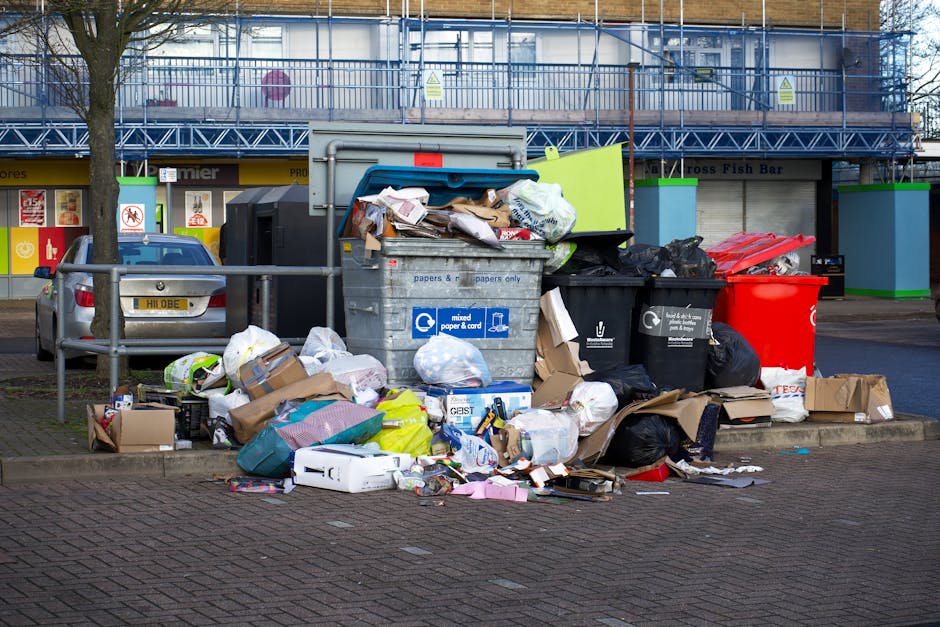
Delays and access issues for Clapham rubbish collection explained
If you have ever stood at the window in Clapham, looking at a pile of bags, old furniture, or builder's waste and wondering why collection is taking longer than expected, you are not alone. Delays and access issues for Clapham rubbish collection explained is a very practical topic, because the problem is rarely just "the van is late". More often, it is a mix of tight streets, parking, shared entrances, blocked pathways, access codes, permits, traffic, or simply not enough space to safely move waste out.
That matters whether you are clearing a flat, managing a business, finishing a renovation, or just trying to get a garden back under control. In this guide, we break down what actually causes delays, how access problems are handled, what you can do to reduce disruption, and when it makes sense to switch to a more flexible service such as waste removal or a more specific solution like house clearance. No jargon. No fluff. Just the useful stuff you wish someone had told you earlier.
Why delays and access issues matter
Waste collection looks simple from the outside. A team arrives, loads the rubbish, and drives off. In reality, the last part of the job is often the hardest. If access is awkward, collections slow down, neighbours get frustrated, and a job that should take one visit can become two. That affects timing, cost, and sometimes even what can be removed on the day.
In Clapham, the local environment adds a few extra wrinkles. You have busy roads, controlled parking zones, narrow side streets, shared entrances, basement flats, converted houses, and the kind of staircases that seem designed after a difficult argument. Let's face it, a sofa that looked manageable in the lounge can feel twice as heavy halfway down the stairs.
Delays also matter because rubbish does not wait politely. If waste is blocking a hallway, sitting in a garden after a storm, or piling up outside a business, the pressure grows quickly. Smells, trip hazards, pests, and complaints from neighbours can follow. So this is not just about convenience. It is about keeping things safe, tidy, and under control.
Expert summary: the best collections are usually the ones planned before the van arrives. Good access planning often saves more time than any rushed fix on the day.
How delays and access issues work in practice
Most rubbish collection delays fall into one of three groups: vehicle access, property access, or operational timing. They overlap more often than people expect.
1. Vehicle access problems
This is the outside-in issue. The team cannot stop near the property, cannot safely load, or cannot legally wait where they need to. In busy parts of Clapham, even a short loading pause can be complicated by parking pressure, traffic, or restrictions. If the vehicle is too far away, moving bulky waste takes longer and becomes more physically demanding.
2. Property access problems
This is the inside-out issue. Think locked gates, broken buzzers, no lift access, low ceilings, tight stairwells, or a garden only reachable through the house. Flats and converted buildings are especially common examples. A straightforward clear-out can become a careful carry operation, one awkward item at a time.
3. Timing and coordination problems
Even when access is technically fine, timing can still trip things up. Maybe the resident is not in yet. Maybe waste has not been brought to one place. Maybe the driveway is blocked by a delivery van. Maybe the collection team arrives during school-run traffic and has to wait out the chaos. These are ordinary problems, but they still cause delay.
When a professional team handles rubbish collection, they usually assess access before lifting anything. That can mean asking for photos, checking floor level, confirming whether items must come through communal areas, or understanding if parking needs arranging. If you are booking a service through home clearance or flat clearance, this pre-check is often what separates a smooth visit from a stressful one.
Key benefits and practical advantages
Planning around delays and access issues is not just defensive. It gives you some real advantages, especially in a place like Clapham where no two properties behave quite the same.
- Less waiting around: if the team knows the layout, they can work faster and more confidently.
- Clearer pricing: access details help reduce surprises and reduce the chance of extra charges later.
- Safer lifting: fewer awkward carries usually means fewer risks for staff and residents.
- Less disruption to neighbours: shorter loading times and better parking planning help keep the peace.
- Better first-time completion: the job is more likely to be finished in one visit.
- More suitable service choice: you may realise you need a specialist option such as furniture disposal or builders waste clearance rather than a general collection.
There is also a quieter benefit: peace of mind. When you know the route is clear, the lifting plan is realistic, and the van can actually get close enough, the whole thing feels less like a gamble.
Who this is for and when it makes sense
This topic is relevant to more people than you might think. It is not only for landlords or builders. It affects everyday household clear-outs too.
Homeowners and tenants
If you are clearing a house after a move, after a decorating job, or because the loft has finally reached critical mass, access matters straight away. Narrow hallways, shared driveways, and missing parking space can make even light waste awkward.
Flat owners and residents in conversions
Flats often bring the most access challenges. The stairs are tighter. Lifts may be small or not suitable for bulky waste. Communal doors can need codes, keys, or somebody to let the team in. If you live in a top-floor flat, timing becomes even more important.
Businesses and landlords
Shops, offices, hospitality venues, and rental properties need predictable turnaround. A delay can hold up cleaning, re-letting, refurbishment, or compliance work. If you are dealing with mixed rubbish streams or office contents, a service such as office clearance can be more practical than trying to stage everything yourself.
Builders and trades
Builder access is a world of its own. Waste can get in the way of scaffolding, materials, and safe movement around the site. Broken access, blocked parking, or an unfinished path can turn into a long day. That is where builders waste clearance becomes useful.
If the rubbish is mainly green cuttings, broken branches, or old soil bags, a focused service like garden clearance may be the better fit. If it is household clutter mixed with large items, house clearance is usually closer to what you need. Simple, really, once the layers are stripped back.
Step-by-step guidance
Here is the most reliable way to reduce delays and access issues before collection day.
- Walk the route first. Start at the street and follow the exact path waste will take. Notice gates, steps, low beams, narrow turns, and anything that looks annoying. Often it is the last five metres that cause the trouble.
- Check parking and stopping space. If the vehicle cannot park close by, make a note of where it can stop safely. In some cases, the difference between a smooth job and a hard one is literally a few metres.
- Tell the team about lifts, buzzers, keys, or codes. Do not assume they can guess. They cannot. If access requires a concierge, intercom, or shared entrance, mention it early.
- Group the waste together where possible. One tidy pile near the exit is much easier than items spread across three rooms and a garden shed. It also helps the crew assess volume more accurately.
- Separate anything that needs special handling. Heavy furniture, sharp materials, damp waste, and mixed builder's rubbish may need different handling. A service like furniture clearance can be more efficient if the main issue is large household items.
- Share photos before the visit. A few honest images can save a lot of guesswork. Show staircases, doors, access points, and the waste itself. No glamour shots needed.
- Have someone available if required. If access depends on someone opening a gate or supervising a shared area, make sure they know the time window and actually show up. Tiny detail, big difference.
One useful habit: think of access as part of the job, not an extra. Once you do that, planning becomes much easier.
Expert tips for better results
These are the things that make a noticeable difference in real life, not just in theory.
Be honest about the awkward bits
If the stairwell is steep, the parking is tight, or the lift is too small, say so early. Teams can usually work around limitations, but only if they know about them. Surprises are what slow everything down.
Choose the right service for the material
Trying to force every job into a generic rubbish collection is a common mistake. A garage full of mixed junk, a garden full of clippings, and an office full of desks are not the same thing. Matching the service to the waste type helps avoid delays on site and can make the removal more efficient.
Plan for the time of day
Morning traffic, school-run congestion, and late-afternoon street parking pressure can all make access harder. In Clapham, a perfectly simple job can become sticky if the arrival time is badly chosen. This is one of those small details that pays off more than people expect.
Keep communal areas clear
In flats and shared houses, a bag left in the wrong spot can create a domino effect. It blocks movement, makes lifting awkward, and can annoy other residents. Keep hallways clear wherever possible.
Use a realistic yardstick for volume
People often underestimate how much space waste takes up once it is gathered into one place. A single bulky item can look harmless until it is beside three more. You know the scene. Suddenly it is not "just a few bits".
For properties with storage areas, don't forget the forgotten spaces. A cluttered loft or garage can hide access problems until the day of the collection. If that is the case, loft clearance or garage clearance may be the more efficient route.
Common mistakes to avoid
Most delays are avoidable. Not all, but most. And the same handful of mistakes show up again and again.
- Not mentioning access restrictions in advance. This is the big one. The team turns up expecting a clear route, then finds three locked doors and a narrow staircase.
- Leaving waste in multiple rooms. It sounds easier in the moment, but it slows collection and makes sorting harder.
- Assuming parking will "sort itself out". In Clapham, that is a risky assumption. Sometimes it works. Often it does not.
- Mixing different waste types without saying so. Furniture, builder's rubble, garden waste, and business rubbish may need different handling. Be specific.
- Underestimating bulky items. That old wardrobe is heavier, wider, and more awkward than you remember. Funny how that happens.
- Not checking whether neighbours need notice. In shared buildings, a heads-up can prevent complaints and awkward conversations later.
A simple rule helps here: if something might slow the crew down, mention it. It saves time, and honestly, it saves a bit of embarrassment too.
Tools, resources and recommendations
You do not need a complicated toolkit to manage access well. Mostly you need good information and a decent plan.
Useful things to have ready
- A quick description of the property type: house, flat, shop, office, or mixed-use building.
- Photos of entrances, stairs, lifts, parking space, and the waste itself.
- Approximate item sizes, especially for sofas, mattresses, wardrobes, and desks.
- Any access codes, gate instructions, or concierge details.
- A rough idea of whether the waste is domestic, commercial, garden, or builder's material.
Recommended service pages to compare
If your job is straightforward, start by looking at the service most closely matched to your waste type. For example, mixed household clutter may point to home clearance, while workspaces often fit business waste removal. If recycling and disposal standards matter to you, the team's approach to recycling and sustainability is also worth reviewing.
For peace of mind on operational matters, it is sensible to read about insurance and safety and the company's health and safety policy. Those pages are boring in the best possible way. They tell you whether the basics are properly thought through.
If you want to understand how pricing is usually handled, the pricing and quotes page can help set expectations before you commit. That is especially helpful when access is tricky and you want fewer surprises later.
Law, compliance, standards, or best practice
When rubbish collection is delayed or access is awkward, there are a few compliance-minded points worth keeping in view. This is not legal advice, but it is sensible best practice.
First, waste should be handled by people who understand how to move it safely and dispose of it responsibly. If you are arranging clearance for a business, landlord property, or renovation project, it is wise to keep clear records of what is removed and who is responsible for it. That helps with accountability and avoids confusion later.
Second, shared buildings need care. Communal hallways, fire exits, and access routes should not be blocked. Even for a short time, an obstruction can create unnecessary risk. If the only route is through a shared area, keeping that route clear and brief is just common sense.
Third, because access issues often involve manual handling, the safest approach is to reduce awkward lifting wherever possible. That usually means better staging, better parking, and fewer unnecessary carry distances. In plain English: don't make the crew haul a heavy wardrobe the long way round if you can help it.
Finally, if the collection involves specialist waste, mixed items, or large-scale clearances, it is best practice to choose a provider that explains its process clearly. If the job is a full property job rather than a single-item pickup, a structured service such as house clearance is often a safer and more efficient option than piecing it together yourself.
Options, methods, or comparison table
Not every collection problem needs the same fix. Here is a simple comparison that may help you decide what fits best.
| Approach | Best for | Typical access needs | Main upside | Possible downside |
|---|---|---|---|---|
| General rubbish collection | Mixed household waste in manageable amounts | Reasonable parking and a clear route | Simple and fast when access is straightforward | Can slow down if items are bulky or spread out |
| Flat clearance | Flats, conversions, and smaller living spaces | Buzzers, stairs, lifts, communal entry | Designed around property-specific access | May need more pre-planning than a house job |
| Furniture clearance | Sofas, beds, wardrobes, tables, and large items | Wide enough route and safe lifting space | Good for bulky items that slow down ordinary collections | Needs extra care on stairs and tight corners |
| Builders waste clearance | Renovations, refurbishments, and site debris | Vehicle access, safe loading point, site coordination | Works well where timing is linked to site progress | Can be delayed by blocked drives or incomplete work areas |
| Garden clearance | Green waste, broken pots, cuttings, and outdoor clutter | Back access, side gate, or outdoor route | Useful after seasonal work or weather damage | Mud, narrow paths, and rear access can slow things down |
If you are unsure which route is best, think about the waste first and the access second. That order usually gives a more honest answer.
Case study or real-world example
A typical Clapham scenario goes like this. A resident in a converted Victorian property books a collection for a mix of old furniture, black bags, and a few items from the loft. On paper, it sounds simple enough. But on the day, the van cannot stop directly outside because of traffic and limited parking. The front path is narrow, the stairwell has a sharp turn, and the loft hatch is smaller than expected.
Nothing is wrong, exactly. It is just awkward. That awkwardness is what creates the delay.
In a case like that, the collection can still be completed, but only if the team adjusts the load plan, protects the route, and works methodically. Sometimes a small change helps a lot: moving the waste to the ground floor earlier, reserving a nearby parking spot, or splitting the job into two phases. In one afternoon, the difference between "this is dragging on" and "that went fine" can come down to one sensible adjustment.
We have seen the same thing with offices and small businesses too. A rear entrance blocked by deliveries, a lift reserved for staff, or a loading bay used at the wrong time can stall the whole process. Once the access issue is identified, the fix is often quite ordinary. The hard part is noticing it in time.
Practical checklist
Use this checklist before collection day. It is the kind of list that saves headaches.
- Confirm the exact collection address and entrance.
- Check whether parking is available close to the property.
- Share access instructions, buzzers, keys, and codes early.
- Tell the team about stairs, lifts, narrow hallways, or low ceilings.
- Group waste into one area if it is safe to do so.
- Separate bulky items from smaller bags where possible.
- Identify any garden, basement, or loft access issues.
- Keep communal areas clear for residents and staff.
- Let neighbours or building management know if needed.
- Ask what happens if parking or access changes on the day.
- Read the company's policies on safety, payment, and complaints if you want extra reassurance.
That last point matters more than people think. A good provider should be easy to understand, easy to contact, and clear about what happens if conditions change.
Get a free quote today and see how much you can save.
Conclusion
Delays and access issues are a normal part of rubbish collection in Clapham, not a sign that something has gone wrong. The real skill is spotting them early and planning around them before the van arrives. If you do that, collections become quicker, safer, and far less stressful. And if the job is more complicated than it first looked, that is fine too. It happens all the time.
Whether you need help with a flat, a house, an office, a garage, or a tricky mixed-load clearance, the best result usually comes from honest access information, the right service choice, and a bit of practical preparation. Small effort up front. Big difference on the day.
And once it is all gone, you really do notice the quiet. The room feels bigger, the path is clear, and the whole place just breathes again. That part never gets old.
Frequently Asked Questions
What usually causes delays in Clapham rubbish collection?
The most common causes are parking restrictions, blocked access, narrow stairwells, shared entrances, traffic, and waste that has not been staged in one place. A small delay can grow quickly if the route in or out is not clear.
How can I reduce access issues before collection day?
Walk the route, check parking, share access codes or key instructions, and move waste to one area if it is safe to do so. Photos help too. They are simple, but very effective.
Do flats cause more rubbish collection problems than houses?
Often, yes. Flats more commonly involve communal doors, lifts, stairs, buzzers, and tighter turning space. That does not mean the job is difficult every time, just that it usually needs more planning.
Can a collection still happen if the van cannot park right outside?
Sometimes yes, but it may take longer. The further waste has to be carried, the more time and effort the job needs. If parking is tight, tell the provider early so they can plan properly.
Is it better to book a general rubbish collection or a specialist service?
It depends on the waste. Mixed household clutter, furniture, garden waste, builder's debris, and office contents all behave differently. A specialist service is often the better fit when the load is bulky or the access is awkward.
What should I tell the collection team before they arrive?
Tell them about stairs, lifts, gates, codes, parking, shared entrances, bulky items, and anything that could slow them down. If something feels obvious to you, still mention it. Providers cannot work around details they do not know.
Why does bulky furniture slow collections down so much?
Because bulky items are awkward in tight hallways, stairwells, and corners. A sofa or wardrobe may be manageable in the room where it sits, but much less manageable when it has to be turned, lifted, and carried through a narrow route.
Are access delays usually avoidable?
Many are. Not all, but many. The biggest difference usually comes from honest pre-booking information and realistic planning around parking and entry points.
What if waste is in a loft, basement, or garage?
Those spaces can add time because they often involve awkward stairs, low clearance, damp conditions, or limited headroom. For that reason, the job may fit a targeted service such as loft or garage clearance better than a general pickup.
Should I prepare communal areas before collection?
Yes, if you can do so safely. Keeping hallways, landings, and doorways clear helps prevent delays, reduces risk, and keeps neighbours happier. It is one of the easiest ways to make the day go more smoothly.
How do I know if pricing will change because of access issues?
That depends on the provider and the job details. The safest approach is to describe the access accurately at the quoting stage so the estimate reflects real conditions. For more clarity, review the provider's pricing and quotes information before booking.
Where can I learn more about how the company works and stays safe?
You can look at the company's about us page, along with its health and safety policy, insurance and safety, and complaints procedure. Those pages help set expectations in a straightforward way.