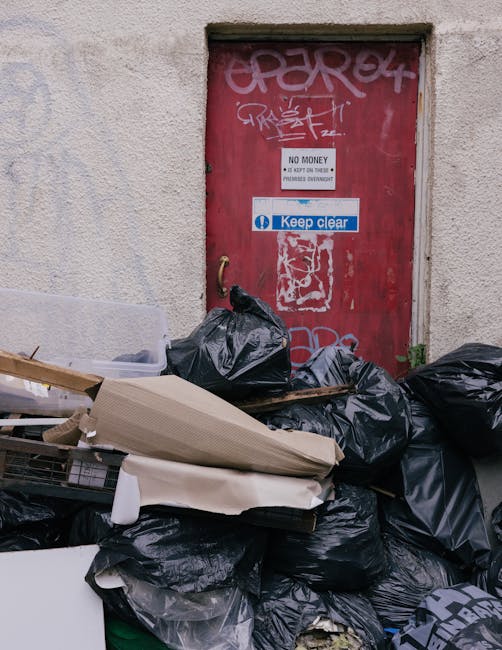
What to do when urgent rubbish clearance is needed in Clapham
When rubbish starts piling up and the clock is against you, it can feel oddly overwhelming. A broken wardrobe in the hallway, builders' debris outside the front door, or a flat that needs clearing before a move-out deadline can turn a normal day into a small crisis. If you need urgent rubbish clearance in Clapham, the best move is usually simple: stop, sort the risk, and get the waste removed in the safest and quickest way possible.
That sounds obvious, but in practice people often waste precious time trying to separate every item, find the right vehicle, or figure out what can go to the tip. This guide walks you through exactly what to do, what to avoid, and how to choose the right clearance option when you need action now, not next week.
It also covers the practical stuff that gets missed: access, bulky items, timing, compliance, disposal routes, and how to keep the whole process calm enough that you can breathe again. Let's be honest, that matters just as much as the clearance itself.
Table of Contents
- Why urgent rubbish clearance matters
- How urgent rubbish clearance works
- Key benefits and practical advantages
- Who needs this and when it makes sense
- Step-by-step guidance
- Expert tips for better results
- Common mistakes to avoid
- Tools, resources and recommendations
- Law, compliance, standards and best practice
- Options, methods, and comparison table
- Case study or real-world example
- Practical checklist
- Conclusion
- Frequently asked questions
Why urgent rubbish clearance matters
Urgent rubbish clearance matters because waste has a habit of becoming more than an eyesore. It can block access, create trip hazards, attract pests, and make a property feel unmanageable very quickly. In a busy part of London like Clapham, that can be especially stressful because space is already tight. A few extra bags, a dismantled sofa, or a pile of renovation offcuts can make a hallway or front garden feel completely unusable.
There is also the simple reality of deadlines. Maybe you are handing back a tenancy, preparing a property for sale, finishing a refurbishment, or trying to reopen a workspace. Waiting around is rarely an option. Even when the waste itself is not dangerous, the pressure it creates can be. You know the feeling: every hour it sits there, it seems to grow.
Speed matters, but so does doing it properly. Randomly loading a car and hoping for the best is not a great plan, especially with mixed waste, heavy items, or anything that could be regulated. A good urgent clearance is fast and organised.
If the waste came from a move, declutter, or property clearance, services such as house clearance, home clearance, and flat clearance can be especially useful because they are built for awkward, mixed loads rather than tidy little piles.
How urgent rubbish clearance works
Urgent rubbish clearance is usually a straightforward process, but the details matter. In most cases, the workflow looks like this:
- You identify the waste type and volume. Is it a few bulky items, a full room, or mixed rubbish and debris?
- You check access. Can a team park nearby? Are there stairs, narrow hallways, locked gates, or timed entry restrictions?
- You request a quote or arrange collection. The quicker you can describe the load, the faster you can get an accurate response.
- The clearance team arrives and removes the waste. This is where lifting, loading, and sorting happen fast if the site is prepared.
- The waste is taken away for proper disposal or recycling. Reuse, recycling, and responsible handling should be part of the process, not an afterthought.
For mixed or heavy waste, a professional approach usually saves time. A pile of old chairs, broken shelving, garden offcuts, and a few contractor bags might look manageable at first. Then you touch it. One item is damp, another is sharper than expected, and suddenly the "quick tidy" becomes a half-day project. Truth be told, that happens a lot.
Where the load is mostly one category, a more targeted service can make sense. For example, furniture clearance or furniture disposal is often a cleaner fit for bulky household items, while builders waste clearance is better for rubble, timber, packaging, and renovation leftovers.
Key benefits and practical advantages
When urgent rubbish clearance is handled well, the benefits are immediate and very tangible. You get your space back. You reduce stress. You stop the situation from becoming a bigger operational problem. Simple, but powerful.
- Faster recovery of usable space. Rooms, driveways, gardens, and entrances become usable again much sooner.
- Less disruption. If you are moving, trading, or hosting contractors, clearing waste quickly keeps everyone moving.
- Safer access. Removing clutter lowers the risk of trips, blocked exits, and awkward lifting injuries.
- Better presentation. First impressions matter, whether for tenants, buyers, staff, or visitors.
- Less emotional load. This is underrated. A cluttered property can feel mentally noisy, and clearing it calms things down.
There is also a practical benefit that often gets overlooked: the right clearance service can help you avoid multiple trips. If you have ever spent a Saturday trying to fit a mattress into a car, you already know why this matters. It's not glamorous. It's just a faff, and not a small one.
For business premises, urgent waste removal is often tied to continuity. A shop, office, or storage area needs to stay functional. Services like office clearance and business waste removal can help when desks, packaging, paperwork, and old fittings are holding up day-to-day work.
Who this is for and when it makes sense
Urgent rubbish clearance is not just for emergencies in the dramatic sense. It is for any situation where the waste cannot sit there for long without causing trouble. That might be a domestic property, a shared flat, a landlord-managed unit, a retail backroom, or a site after minor works.
Common scenarios include:
- End of tenancy deadlines where items must be removed quickly.
- After builders or decorators when leftover waste is blocking access.
- Before sale or letting to make a property presentable.
- After a move when bulky items are left behind or damaged.
- Garden and outdoor clutter that has become unsafe or unsightly.
- Garage, loft, or shed overflows that need sorted without a long delay.
Services such as garage clearance, loft clearance, and garden clearance are often the best match when the problem is location-specific rather than whole-property. That can save time and avoid paying for more than you need.
And yes, sometimes the job is emotionally loaded too. Sorting through a family home, for example, can be a bit much even when the waste itself is straightforward. In those moments, a calm and respectful clearance process matters more than ever.
Step-by-step guidance
If you need to act quickly, follow this sequence. It is practical, not fancy.
- Walk the space first. Look at what must go now and what can wait. Separate urgent items from keep/donate/recycle piles if you can do so safely.
- Make a rough waste list. Note the main categories: furniture, household rubbish, garden waste, building debris, or mixed waste.
- Check access conditions. Stairs, narrow corridors, permit-only parking, basement levels, or top-floor flats can affect timing.
- Measure large items if needed. Oversized wardrobes, mattresses, and appliances can slow things down if they need dismantling.
- Prepare the route out. Clear hallways, unlock gates, and move pets or children out of the way if possible.
- Ask how the waste will be handled. Reuse and recycling should be part of the conversation, especially for bulky items.
- Confirm price structure. Make sure you understand whether the quote is based on volume, item type, labour, access, or a mix.
- Book the earliest sensible slot. If it is genuinely urgent, saying so early makes a difference.
A small but useful tip: take photos before you call. Not polished images, just clear ones. A hallway shot, a close-up of the pile, and one wider view can save back-and-forth and help the team prepare correctly.
If the waste includes old household contents or a larger declutter, house clearance or home clearance may be more efficient than trying to piece together several smaller removals.
Expert tips for better results
In our experience, the fastest clearances are not always the ones with the fewest items. They are the ones where the property is ready. That means access is open, the waste is grouped reasonably, and the customer has been honest about what is there.
Here are a few practical tips that make a real difference:
- Be honest about the load. Underestimating waste volume is the quickest way to delay the job.
- Separate hazardous or awkward items early. Paint tins, sharp metal, broken glass, and heavy appliances need care.
- Keep one clear path out. You do not need to empty the whole room, just create a clean route.
- Tell the team about access quirks. A second-floor walk-up, no lift, or tight stairwell can change the plan.
- Ask about recycling routes. It is useful to know whether reusable furniture and scrap materials can be handled responsibly.
Another thing: do not leave "maybe" items mixed into the urgent pile unless you really have to. If the job is time-sensitive, indecision slows everything down. A quick decision now is better than re-sorting the same stack later. That is one of those annoying truths, but it's true.
For businesses and landlords, it can also help to keep a standing relationship with a provider that handles waste removal and similar services, so you are not starting from zero when an urgent job lands on your desk.
Common mistakes to avoid
Urgent rubbish clearance gets harder when people try to improvise too much. A few common mistakes show up again and again.
- Leaving the booking too late. Waiting until the last minute narrows your options.
- Guessing the volume. "A couple of bags" can turn into a van-load very quickly.
- Forgetting access issues. Parking, lifts, and stairs affect timing more than most people expect.
- Assuming everything can be lifted as-is. Some items need dismantling first.
- Mixing waste types without telling anyone. Mixed loads are manageable, but they need to be declared.
- Choosing only on price. The cheapest option can become expensive if it is slow, unclear, or unsuitable.
One more subtle mistake: trying to "tidy up" waste by hiding it in another room. It feels clever for about five minutes, then it just becomes someone else's problem. Usually yours. Better to be direct.
Tools, resources and recommendations
You do not need a full toolkit to handle urgent rubbish clearance, but a few simple things can help you stay organised and reduce wasted time.
- Phone camera for quick photos of the waste and access points.
- Measuring tape for large furniture or awkward items.
- Marker pens and labels if you are separating keep, donate, and clear piles.
- Heavy-duty gloves for minor sorting work.
- Dust sheets or old blankets for protecting floors or doorframes during movement.
- Bin bags and boxes for smaller loose waste.
Useful service pages to understand what kind of clearance you may need include furniture clearance, furniture disposal, builders waste clearance, and garden clearance. The more clearly you match the job to the waste, the smoother the process tends to be.
If you want to understand how a provider approaches responsibility and customer care, it can also be worth reviewing pages such as about us, insurance and safety, health and safety policy, recycling and sustainability, and payment and security.
Law, compliance, standards and best practice
When waste is being removed urgently, compliance still matters. You do not need to become an expert in waste legislation overnight, but you should make sure the waste is handled by a reputable provider and not dumped somewhere it should not be. Fly-tipping and careless disposal can create serious problems for the person who arranged the clearance, not just the person who moved the waste.
Best practice usually includes:
- Using a provider that handles waste responsibly.
- Being clear about waste type. Especially for mixed, bulky, or potentially hazardous items.
- Keeping records where appropriate. Helpful for landlords, businesses, and renovation projects.
- Following access and safety guidance. Clear routes, secure lifting, and sensible timing all matter.
If the job involves a business premises, office, or trade waste, you should be especially careful about how the waste is described and removed. Services such as business waste removal and office clearance are usually more suitable than treating everything as generic household rubbish.
For your own reassurance, it is sensible to check the provider's terms and conditions before booking. That is not paranoia; it is just good practice. A few minutes now can save a headache later.
Options, methods, and comparison table
Different urgent clearance situations call for different approaches. Here is a simple comparison that can help you decide.
| Option | Best for | Strengths | Watch-outs |
|---|---|---|---|
| Self-clearance | Very small loads, loose bags, light items | Low direct cost if you already have transport | Time-consuming, physical effort, disposal rules can be confusing |
| Van hire and DIY loading | Moderate waste with flexible timing | More control over timing | Parking, lifting, fuel, and disposal handling all fall to you |
| Professional urgent clearance | Bulky, mixed, awkward, or time-critical waste | Fast, organised, less stress | Usually costs more than DIY, but often saves time and hassle |
| Specialist clearance by room or waste type | Furniture, lofts, garages, gardens, builders' waste | Focused approach, often efficient and tidy | May not suit mixed jobs unless combined carefully |
If you are dealing with a small amount of clearly defined waste, DIY can be fine. But if the job is urgent and the waste is awkward, a professional approach usually wins on time, safety, and sheer sanity. The sanity part is not a small thing, by the way.
Case study or real-world example
Here is a realistic example based on a common Clapham scenario. A tenant is moving out on short notice and discovers that a bed frame, a broken chest of drawers, several black bags, and some leftover packing materials still need to go. The hallway is narrow, there is a time slot for lift access, and the keys need to be handed back that evening.
Instead of trying to solve everything in one frantic sweep, the tenant photographs the items, confirms the access details, and arranges an urgent clearance. The bulky furniture is removed first, then the smaller rubbish is loaded safely. The path out is kept clear, the loading is quick, and the flat is handed back in a much better state than it would have been otherwise.
What made the difference? Not magic. Preparation. Clear communication. And not leaving it until the last possible minute, which, to be fair, is easier said than done when life is already moving fast.
That same approach works for landlords, letting agents, homeowners, and small businesses. It is less about the drama of the situation and more about making the next two hours sensible.
Practical checklist
Use this checklist if you need urgent rubbish clearance in Clapham today or very soon.
- Identify exactly what needs removing now.
- Separate urgent waste from items you may want to keep.
- Take clear photos of the waste and access route.
- Check stairs, lifts, parking, gates, and any entry restrictions.
- Measure large items if there is any doubt.
- Remove fragile or dangerous items from the path.
- Ask whether the provider handles recycling or reuse where possible.
- Confirm the service type: house clearance, flat clearance, furniture clearance, builders waste, garden clearance, or waste removal.
- Make sure the quote is clear on timing and what is included.
- Prepare payment details and access instructions in advance.
- Keep pets, children, or residents away from the work area if possible.
- Do a final sweep before the team arrives so they can get straight to work.
Key takeaway: the quickest urgent clearance jobs are the ones where the waste is described accurately, the access is ready, and the right type of service is booked first time.
Conclusion
If you need urgent rubbish clearance in Clapham, the best thing you can do is act decisively but calmly. Identify the waste, check access, choose the right type of clearance, and work with a provider that handles disposal responsibly. That combination saves time and reduces stress far more than trying to muddle through alone.
Whether the problem is a single bulky item, a messy flat, garden waste, or a bigger clear-out after building work, the right approach is the one that gets the space back safely and without unnecessary drama. And honestly, once the rubbish is gone and the place feels lighter, you notice it straight away. The air feels a bit fresher. The room sounds quieter. A small relief, but a real one.
Get a free quote today and see how much you can save.
Frequently Asked Questions
What should I do first when urgent rubbish clearance is needed in Clapham?
Start by identifying the waste that must go immediately, checking access, and taking a few photos. Then arrange the earliest sensible clearance option. The more clearly you describe the job, the faster it can usually be handled.
Can urgent rubbish clearance be done on the same day?
Sometimes, yes. It depends on availability, the size of the job, access, and the type of waste. Smaller or well-prepared jobs are generally easier to fit in quickly.
Is urgent rubbish removal suitable for bulky furniture?
Yes. Bulky items are often exactly why people need urgent clearance in the first place. Furniture clearance and furniture disposal are common solutions when sofas, wardrobes, beds, or tables need to be removed quickly.
What if the waste is mixed with builders' debris and household rubbish?
Mixed loads are common, but they should be described honestly. Builders waste clearance may be needed alongside general waste removal if the load includes rubble, timber, packaging, or renovation leftovers.
How do I know whether I need house clearance or waste removal?
If you are clearing a property full of mixed contents, house clearance or home clearance may be the better fit. If you mainly need loose rubbish or a collection of waste bags and mixed items, waste removal may be enough.
Do I need to sort everything before booking?
No, not always. A rough sort helps, but the main thing is to be clear about what is there. A good clearance team can usually work with mixed items as long as they know what to expect.
What should I do with items that might be reusable?
If you have time, separate anything that could be reused or donated. If not, tell the provider what seems reusable so they can handle it appropriately where possible.
Are garden and garage clearances handled differently from general rubbish removal?
Often, yes. Garden clearance and garage clearance can involve heavier, dirtier, or more awkward waste than standard household rubbish, so it helps to match the service to the space.
What details should I give when I request a quote?
Give the type of waste, approximate volume, access conditions, your location, and any timing pressure. Photos are very helpful too. They save a lot of guesswork.
Is it worth paying for urgent clearance instead of doing it myself?
If time is tight, the waste is bulky, or access is awkward, usually yes. DIY can work for small loads, but professional clearance often saves a surprising amount of time and effort.
How can I make the clearance happen faster?
Clear a route, keep the waste grouped, send photos early, and be ready with access details. Those small steps make a big difference.
What should businesses do if rubbish is affecting operations?
Businesses should treat it as an operational issue, not just a cleanup task. Office clearance and business waste removal can restore workspace quickly and reduce disruption for staff and customers.
Where can I learn more about service quality and safety before booking?
Look for information on insurance, safety, payment, and sustainability. Those pages can tell you a lot about how seriously a provider handles the job, even before you speak to them.
If you are facing a messy, time-sensitive clearance right now, take a breath and start with the next sensible step. One call, one photo, one decision. That is usually enough to get things moving.